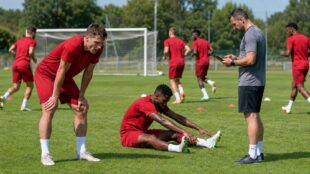
Players in the Red Zone Before the 2026 World Cup and the New Reality of Football Fatigue
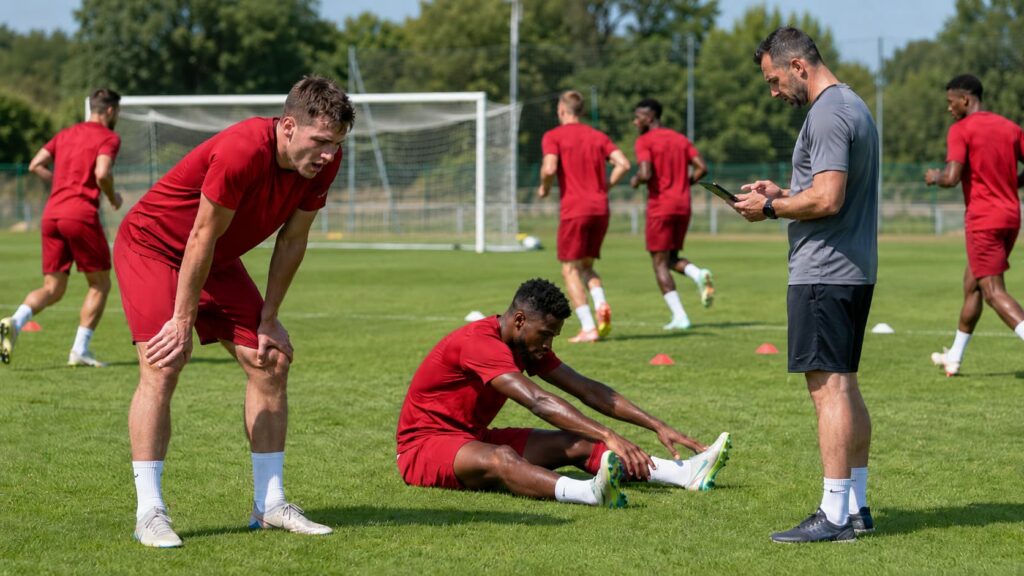
The 2026 World Cup will not begin with a clean physical slate. Many players will arrive after long club seasons, domestic cups, continental competitions, international qualifiers, commercial travel, media duties, and only a short window to reset before the biggest tournament in football. The phrase “red zone” has become a useful way to describe this danger. It refers to players whose workload, recent increase in intensity, or accumulated fatigue places them closer to injury and underperformance.
In past tournaments, fatigue was often discussed in simple terms: a player looked tired, lacked sharpness, or needed rest. Today the conversation is much more detailed. Clubs and national teams track minutes, high-speed runs, accelerations, decelerations, sleep, soreness, heart-rate responses, travel load, and recovery markers. The problem is that data does not remove the pressure. It only makes the risk harder to ignore. Before the 2026 World Cup, the most important question for many squads may not be who has the best starting eleven. It may be who can keep that eleven available.
The Long Season Before the Tournament
Modern football has stretched the calendar to its limit. Elite players can move from league matches to domestic cups, from European competitions to international windows, from preseason tours to summer tournaments. For some, the World Cup is not the start of a new mission. It is the final stage of a year that never properly stopped.
This matters because fatigue is rarely created by one match. It builds through repeated stress with incomplete recovery. A midfielder who plays twice a week for months may still look strong on television, but the body absorbs every sprint, tackle, turn, and landing. A winger who repeatedly hits maximum speed carries a different risk from a goalkeeper, and a full-back who makes constant recovery runs may enter the tournament with invisible physical debt.
The danger grows when the workload suddenly increases. Sports scientists often watch sharp jumps in demand because the body may not have enough time to adapt. A player who moves from limited minutes to a full schedule can be at risk even if their total season load looks lower than a teammate’s. This is why the red zone is not only about the number of games. It is about timing, change, position, intensity, and recovery.
Why the 2026 World Cup Adds Extra Stress
The 2026 tournament brings its own physical challenges. It will be played across the United States, Canada, and Mexico, with different climates, travel distances, time zones, humidity levels, and altitude profiles. Even if teams plan carefully, the tournament environment will test the recovery systems of every squad.
Heat is one of the central concerns. High temperatures and humidity can reduce physical output, increase cardiovascular strain, and make recovery slower. When players are already fatigued from the club season, heat can push them closer to the edge. Cooling breaks, hydration strategies, sleep management, and training time adjustments become more than small details. They become performance tools.
Travel also matters. Players are used to flying, but tournament travel is different because the rest windows are narrow and the emotional load is high. A team can win a match, travel, recover, prepare tactically, handle media, and play again within a few days. Even small disruptions to sleep and rhythm can accumulate. In a World Cup, there is no long recovery block waiting after a bad week.
The Red Zone Is Not Just a Medical Label
Calling a player “in the red zone” should not mean they are weak or unprofessional. In many cases, it means the opposite. These are often the players trusted most by clubs and national teams. They play because they are valuable, durable, and tactically necessary. The risk is that reliability becomes overuse.
A star midfielder may be selected every week because the team cannot function without him. A center-back may play through minor discomfort because his communication holds the defense together. A forward may keep starting because one moment of quality can decide a match. The same qualities that make a player essential can make them vulnerable.
This creates a difficult decision for national coaches. Resting a key player may protect them for later rounds, but losing a group-stage match can damage the whole tournament. Starting them may bring short-term quality, but it can also increase the chance of injury. The red zone turns team selection into a balance between ambition and protection.
Rotation Becomes a Competitive Skill
Squad depth will matter more than ever in 2026. Rotation is no longer just a way to keep substitutes happy. It is a survival strategy. Teams that trust 16 or 17 players may have an advantage over teams that rely too heavily on a fixed eleven.
But rotation is not simple. The World Cup is short, emotional, and unforgiving. Players want rhythm. Coaches want relationships on the pitch. Supporters want the best names. Media pressure grows when a star starts on the bench. A coach who rotates successfully must understand not only physical data but also psychology, tactics, and timing.
The best squads will not rotate randomly. They will use specific minutes for specific roles. A high-energy pressing forward may start one match and come from the bench in another. A veteran midfielder may manage games rather than play every minute. A full-back with a heavy club season may need protection in lower-risk phases. The goal is not to rest everyone. The goal is to spend energy intelligently.
Fatigue Changes How Football Looks
Fatigue does not only increase injury risk. It changes decision-making. A tired player reacts later, scans less often, presses without the same coordination, misjudges distance, or chooses the safe pass when the brave one is needed. In tournament football, these details can decide everything.
A team may look tactically poor when the real issue is physical decline. Pressing can become late. Defensive lines can drop without instruction. Attacking runs can disappear. Substitutes may look better not because they are more talented, but because they are fresher. The public often reads these moments as attitude or nerves. Sometimes they are simply physiology.
This is why fatigue management belongs in football analysis, not only in medical departments. The way a team controls tempo, keeps the ball, chooses when to press, and manages transitions can protect players from unnecessary stress. Tactical intelligence can reduce physical waste.
The Human Side of Workload
There is also a mental side to the red zone. Players know when their bodies are near the limit. They may not say it publicly, but they feel tight muscles, slow recovery, poor sleep, heavy legs, and the fear of breaking down at the wrong moment. At the same time, the World Cup is the tournament no player wants to miss.
This creates silence. Many athletes minimize pain because the opportunity is too big. They fear losing a place. They fear being seen as fragile. They fear that one honest medical conversation could move them from starter to doubt. Good teams must build trust so players can report problems before they become injuries.
The new reality of football fatigue is not only about better technology. It is about creating environments where protection is not seen as weakness. A player who sits out one session may be saving the tournament. A player who accepts reduced minutes may be helping the team survive.
The Tournament May Be Won in Recovery Rooms
The 2026 World Cup will still be decided by goals, saves, tactics, courage, and moments of genius. But behind those moments will be recovery plans, load management, hydration protocols, sleep routines, travel schedules, and difficult selection choices. The teams that understand fatigue best may not look cautious. They may look fresher when the tournament becomes hardest.
The red zone is a warning, not a prediction. It does not mean a player will fail. It means the margin has narrowed. In modern football, where every sprint is tracked and every calendar is crowded, ignoring that warning is no longer possible.
The World Cup has always tested talent. In 2026, it will also test how well football protects the bodies that carry that talent.